Built for Australian Medical & Healthcare Cleaners
Healthcare cleaning, audit-ready.
Per-zone infection-control logs, TGA-registered chemical registry, colour-coded equipment auditing, and audit-ready exports for ACHS, QIP, and ACSQHC accreditation cycles. Built for Australian medical-cleaning operators serving GP clinics, dental practices, allied health, day surgeries, and aged care.
Commercial too? Commercial cleaning · Strata? Strata cleaning.
Free Tools & Resources
Reference material for tenants and operators
Start a Cleaning Business
8-step founder guide — ABN, GST, insurance, kit, pricing, finding first clients.
Open →InteractiveCleaning Price Calculator
Interactive estimator for standard, deep, and bond cleans across AU property types.
Open →ReferenceBond Clean Checklist by State
Universal inclusions plus state-by-state authority guide for end-of-lease cleans.
Open →Operator GuideCleaning Services Award Guide
Plain-English MA000022 — classification levels, loadings, allowances for rostering.
Open →InteractivePer-Sqm Pricing Calculator
Construction, builders clean and office strip-out pricing in 2026 AU rates.
Open →ComplianceWhite Card Guide
Construction Induction explained — per-state rules, online vs in-person, cost, renewal.
Open →Founder GuideFirst 10 Clients Playbook
Channel-by-channel founder playbook — real-estate agents, GBP, hipages, referrals.
Open →Key takeaways
5- Healthcare cleaning in Australia is regulated under the National Safety & Quality Health Service Standards (NSQHS) — particularly Standard 3 on Preventing & Controlling Infections. Cleaning logs, chemical registers, and staff training records are mandatory audit evidence.
- Disinfectants used in healthcare must be TGA-registered (ARTG-listed) for the specific surface and contact-time being claimed — using the wrong contact time for the claimed organism is the most common audit finding.
Show 3 moreShow less
- Colour-coded equipment (Red bathrooms, Blue general, Green kitchen, Yellow clinical) is the AU industry standard for cross-contamination prevention. Cross-contamination breaches threaten facility accreditation.
- Staff training (Certificate III in Cleaning Operations + annual infection-control refresher) is contractually required by most healthcare facilities — track expiry per staff member or lose contracts at renewal.
- Audit cycles vary by facility type (ACHS for hospitals, QIP for GP, ACSQHC for aged care) but all require ≥6 months of service-delivery evidence on demand — paper-based logging is increasingly unacceptable in 2026.
Built for Healthcare Reality
Six features medical cleaners actually use
Generic cleaning tools don't handle infection-control logging or TGA-chemical tracking. OneBookPlus is built for the regulated healthcare cleaning workflow.
Infection-Control Cleaning Logs
Per-room cleaning logs aligned to NSQHS Standard 3 (Preventing & Controlling Infections). Time-stamped, signed-off by the cleaner, retained for the audit cycle. Auditors see exactly what was done where, with what chemicals, by whom.
TGA Chemical Registry
Healthcare disinfectants must be TGA-registered (ARTG-listed) for the surface and contact-time you're claiming. Maintain a per-site chemical register with safety-data-sheet links and contact-time references — auditor-ready when they ask.
Colour-Coded Equipment Audit
Red for bathrooms, blue for general, green for kitchen/food prep, yellow for clinical. NHS-derived colour coding is the AU industry standard. Track which mop heads, cloths, and equipment serve which zones — cross-contamination breaches are the #1 audit finding.
Staff Training & Certification
Every cleaner working in a healthcare environment needs current infection-control training (typically annual refresh). Track Certificate III in Cleaning Operations, infection-control modules (BSBINF31xx), and any facility-specific orientation per staff member.
Specialty-Zone Scope
Different facility types carry different scope intensity — GP rooms, dental practices, allied-health clinics, day surgeries, aged-care common areas. Per-facility scope templates ensure every zone gets the right method, frequency, and chemicals.
Audit-Ready Reporting
Healthcare facilities are audited by accreditation bodies (ACHS, QIP for general practice, ACSQHC for aged care). Generate a 6- or 12-month service-delivery report on demand — every clean, every cleaner, every chemical batch, every zone.
See it in action
The screens you'll actually use.
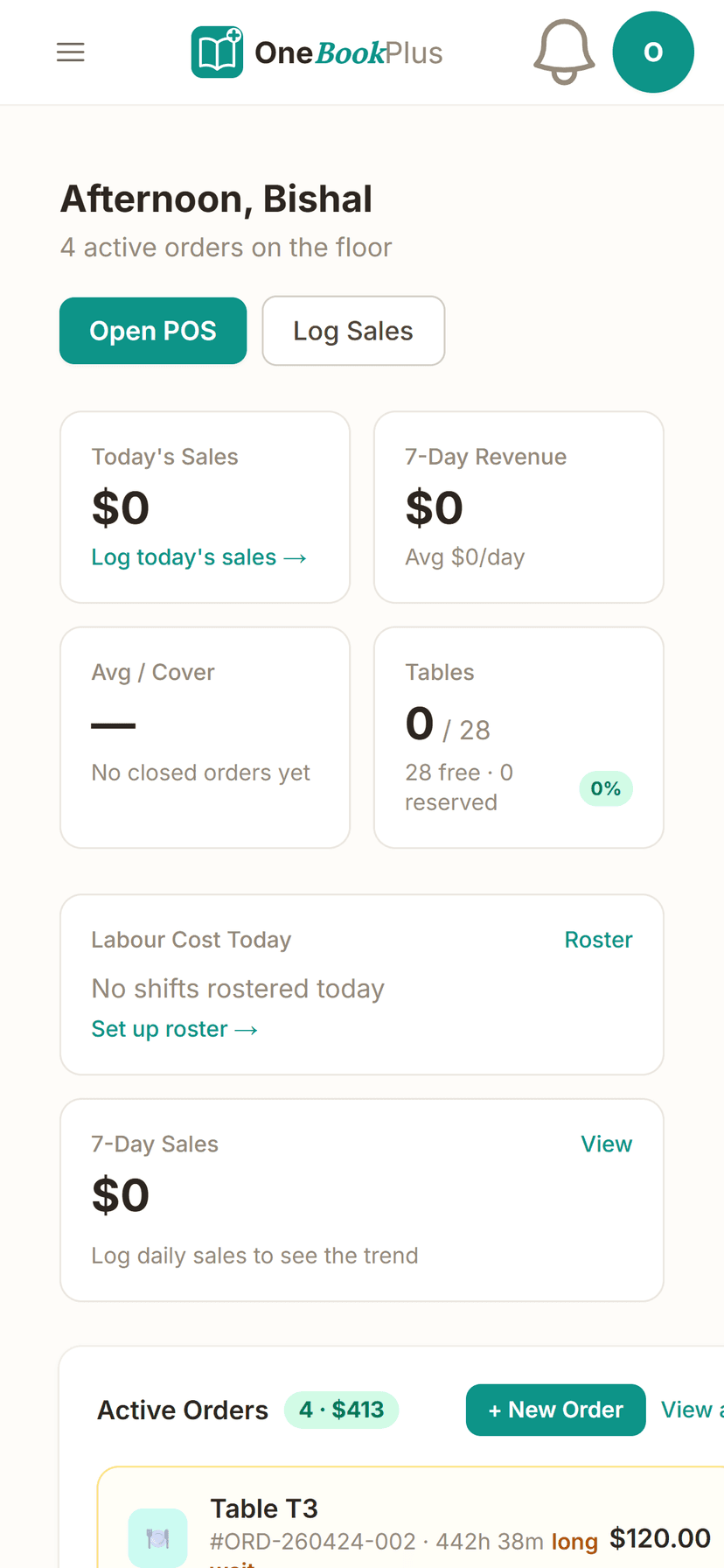
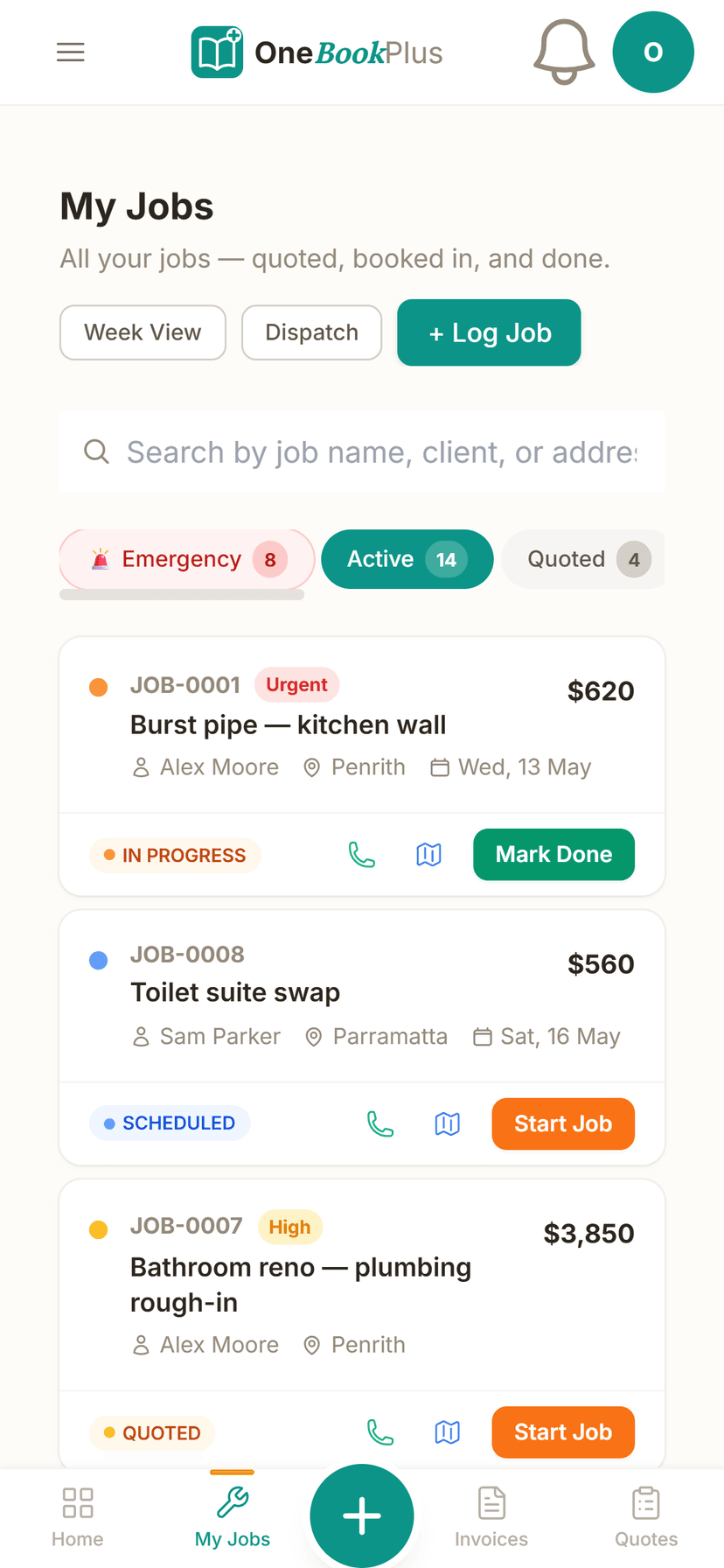
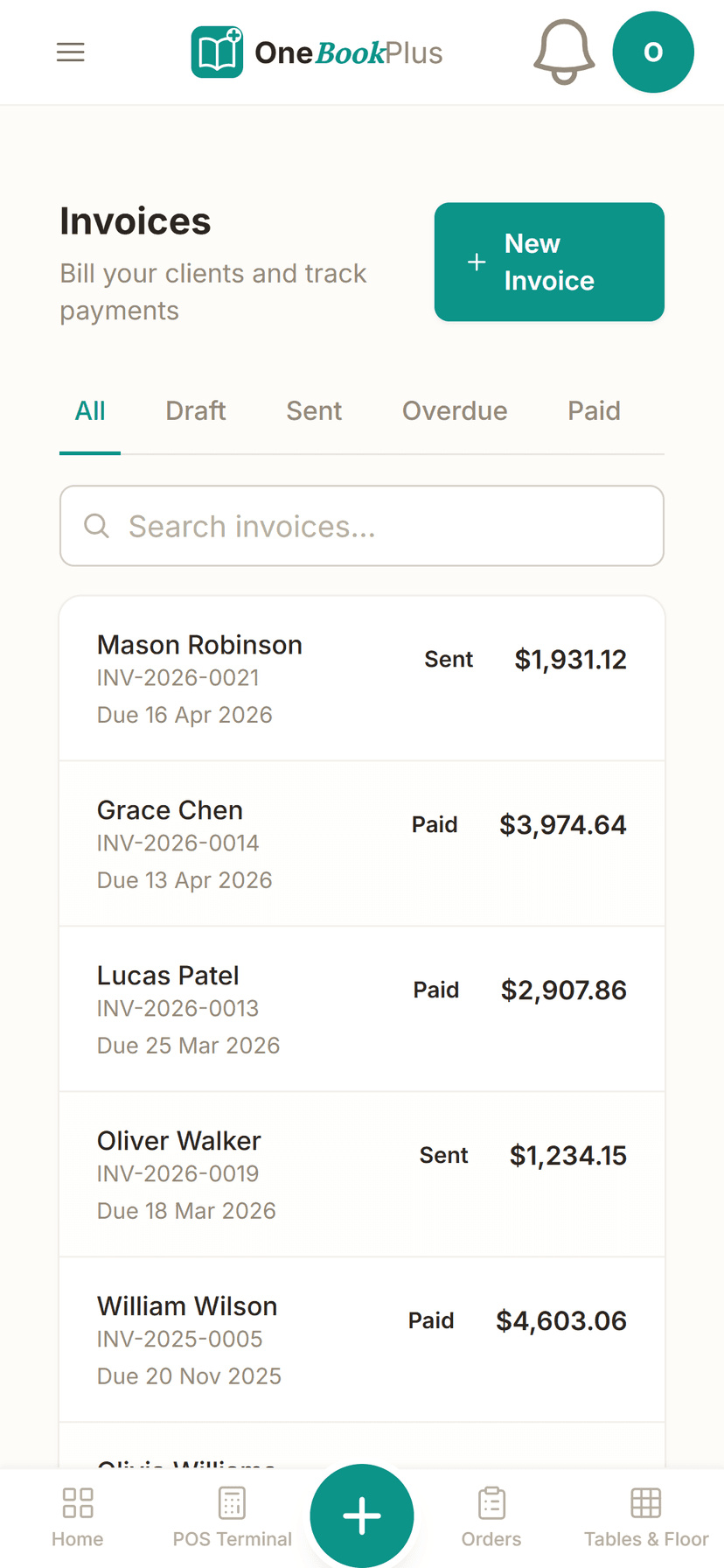
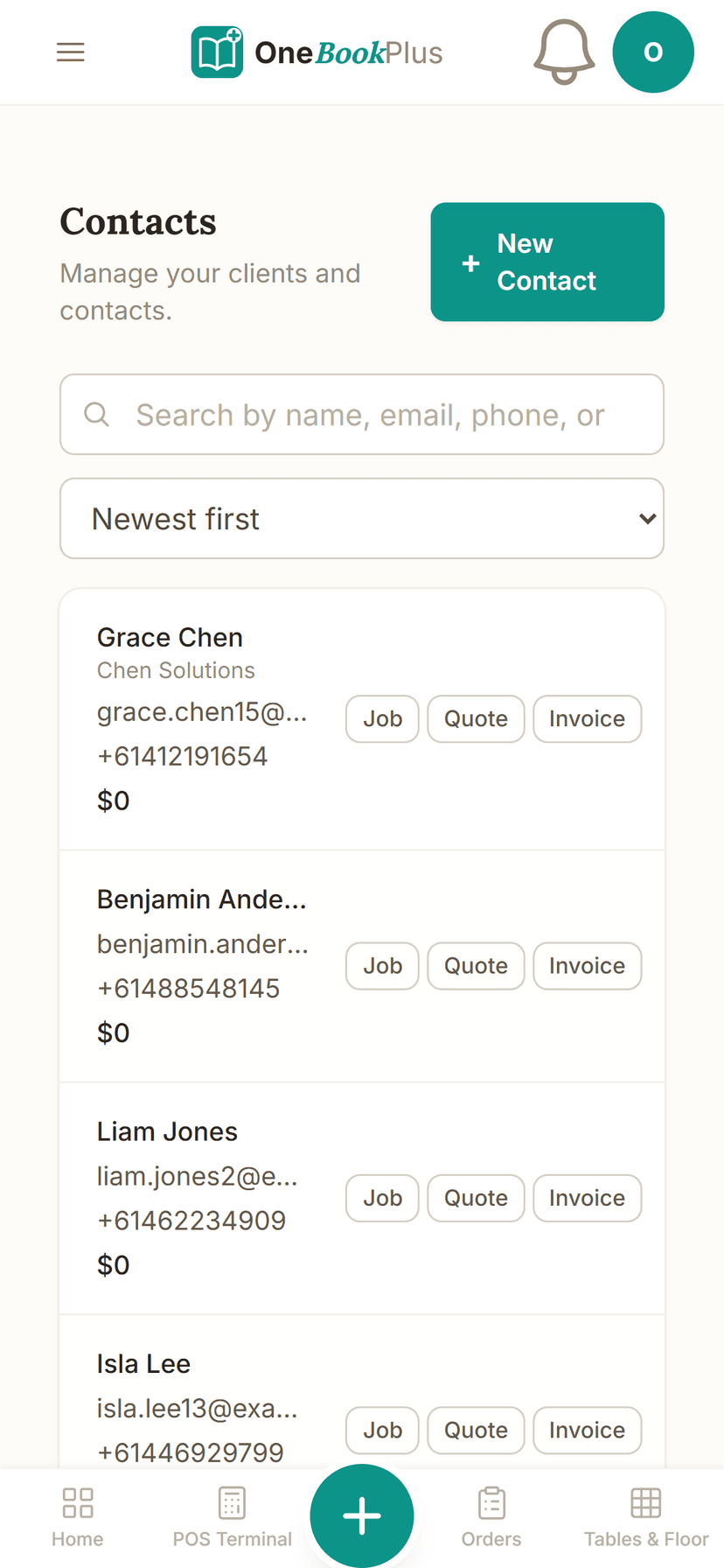
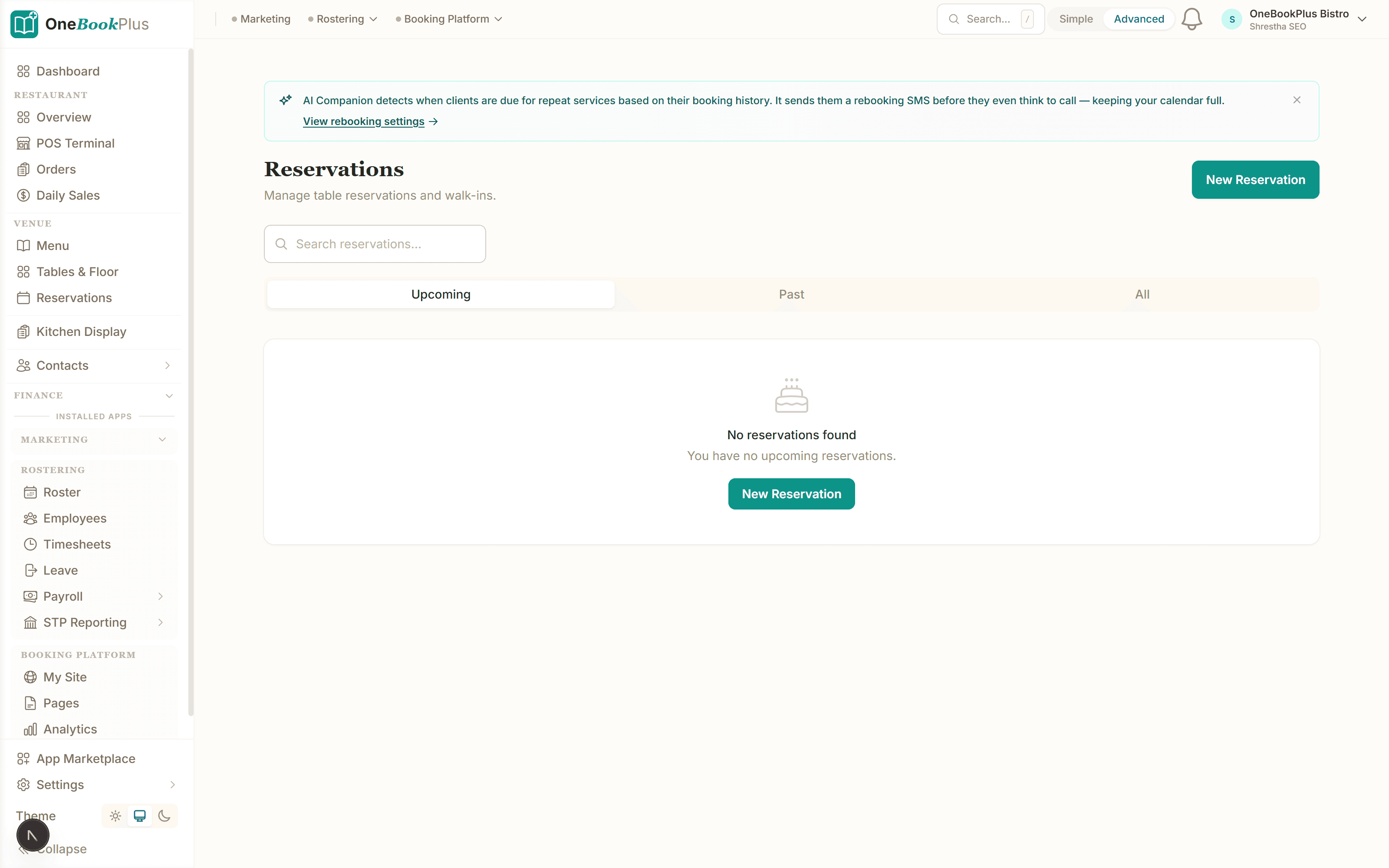
Not mockups — these are the real product screens medical cleaners use day-to-day.
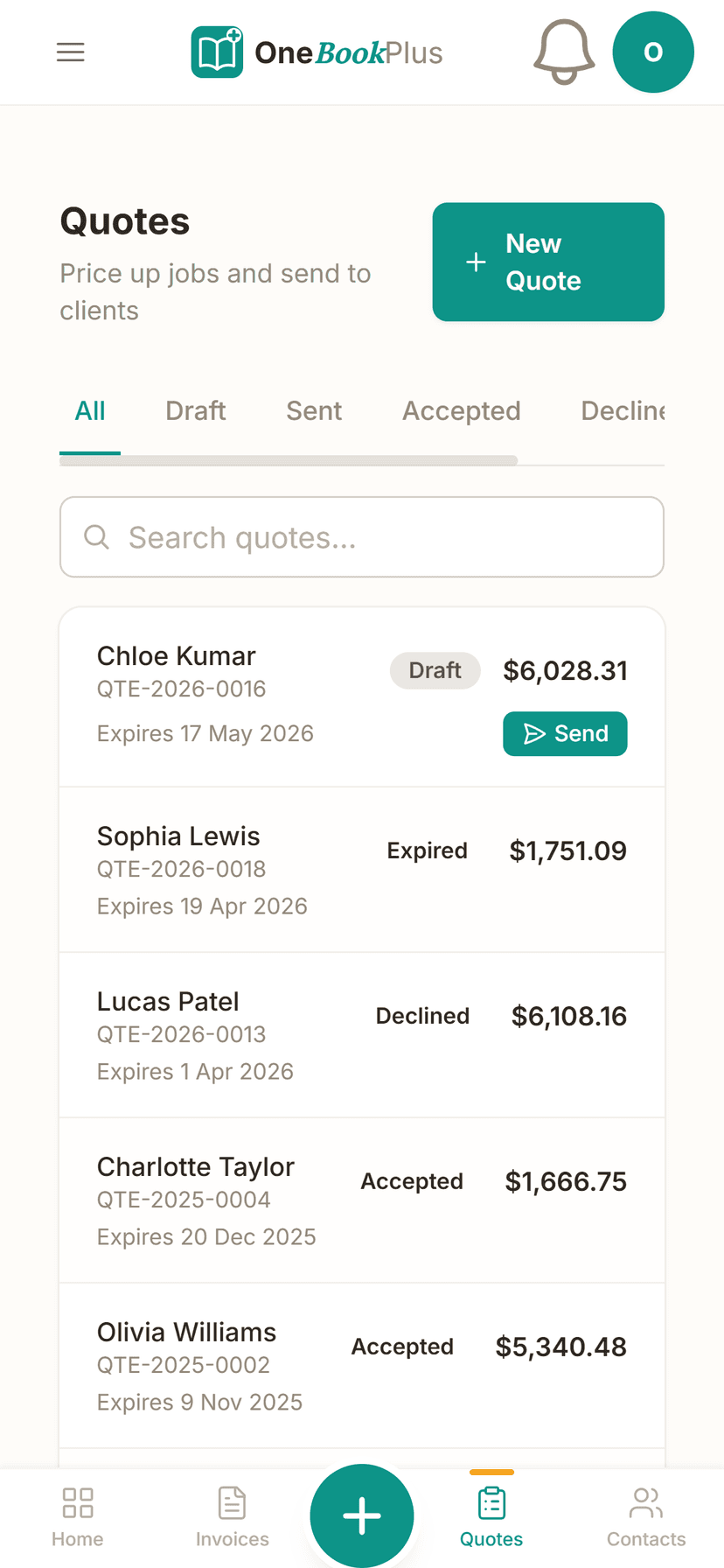
Recurring bookings, auto-scheduled
Weekly, fortnightly, monthly — set once, OneBookPlus handles the schedule, reminders and invoices.
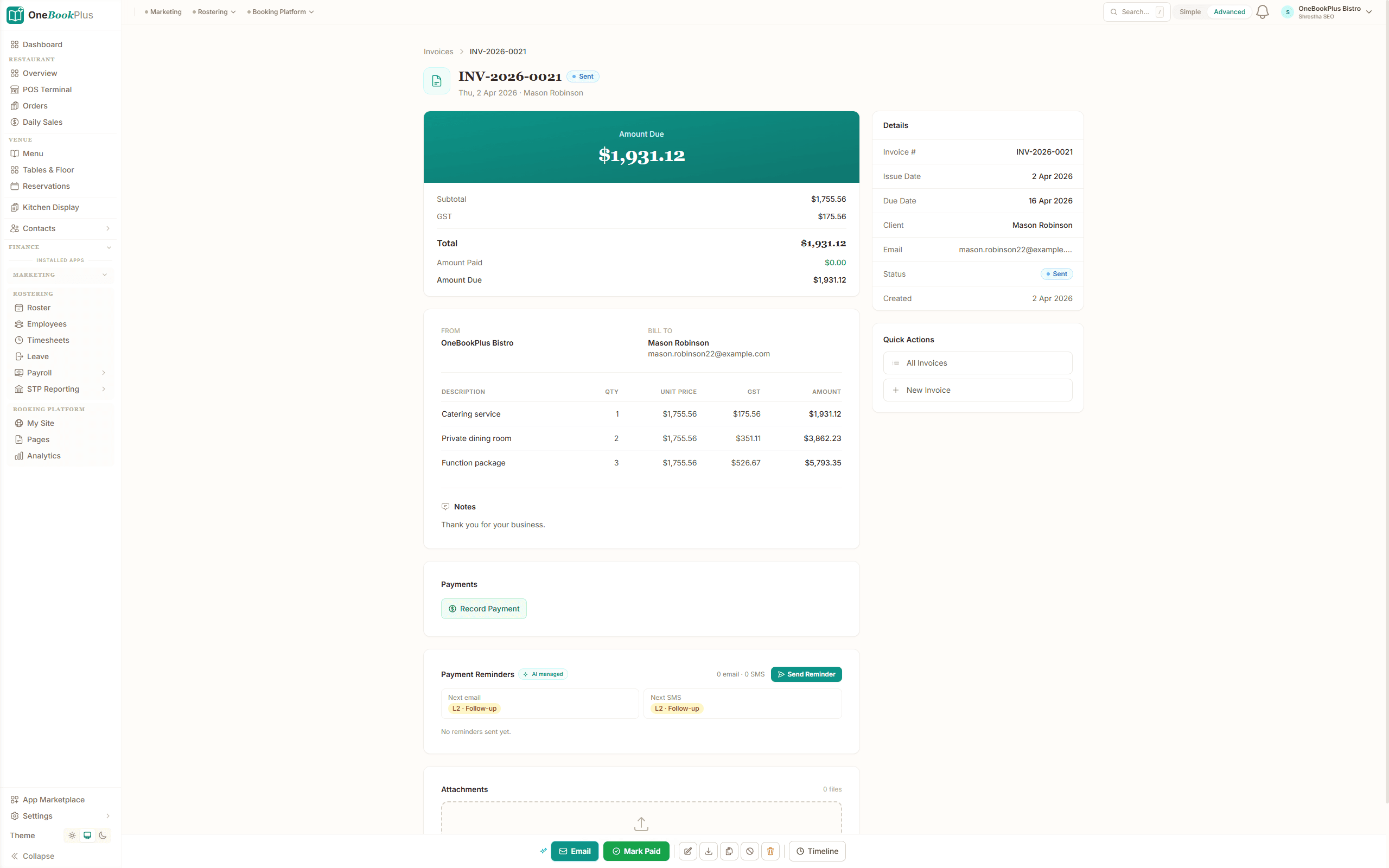
Invoice per clean, batched monthly
Per-clean invoices or end-of-month consolidated billing. GST-compliant, Stripe Pay Now.
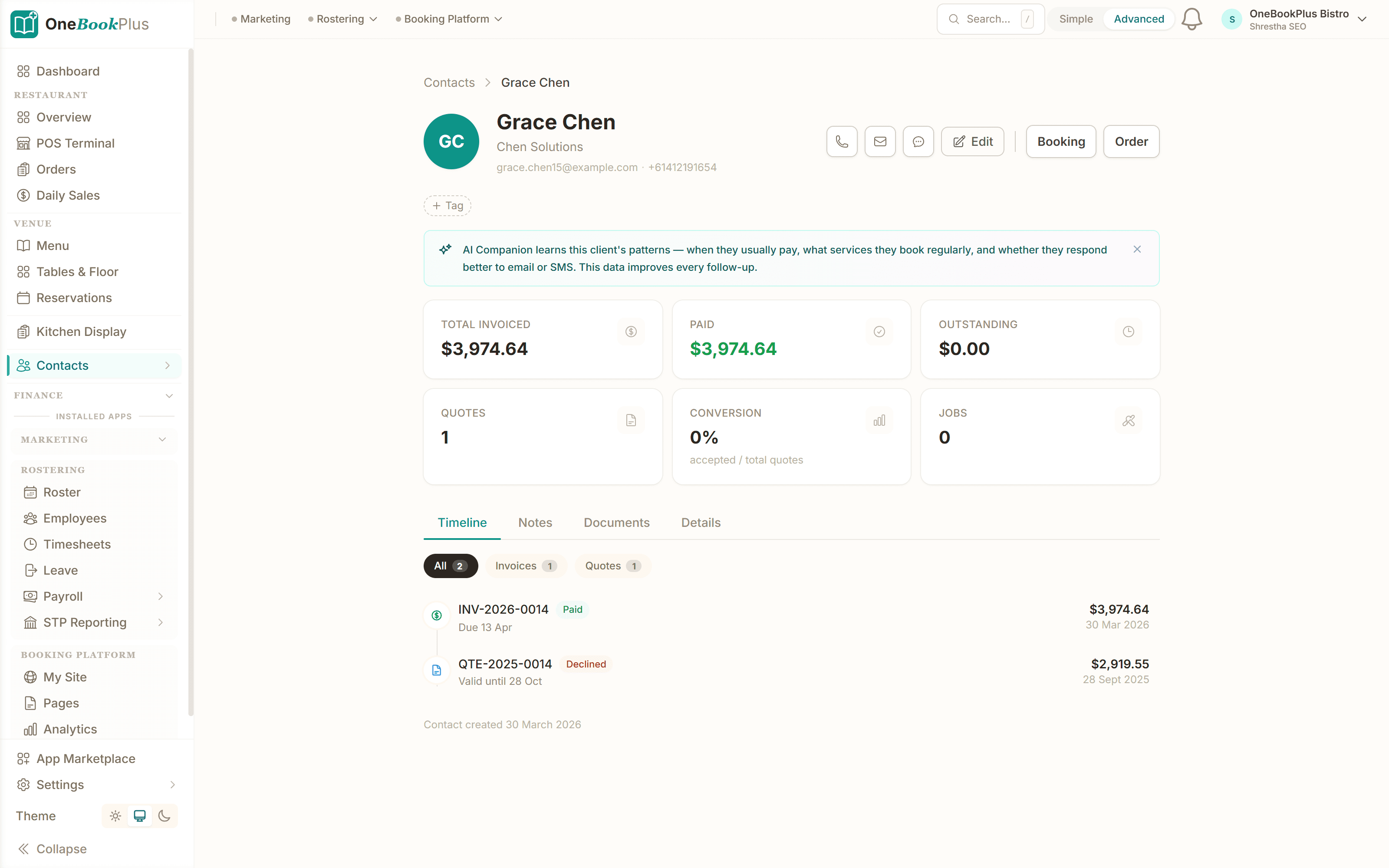
Every client's job history
Contact timeline shows every clean, photo, feedback and invoice. Notes stay with the customer.
Healthcare Workflow
From facility onboarding to accreditation
Four steps mapping how medical cleaning contracts actually run.
Onboard the facility
Add the facility — GP clinic, dental practice, day surgery, aged-care site. Map zones to scope intensity (waiting room, treatment room, sterile area, kitchen, toilets). Attach the facility's preferred chemical list.
Set the schedule
Recurring contract with frequency per zone — twice-daily reception clean, end-of-day treatment room reset, weekly deep clean. Cleaners see per-zone briefing on their phones.
Service, log, photo
Cleaner works the zone, logs the chemical used (with batch number), time-stamps completion, photo-stamps key surfaces. Cross-contamination errors flagged if wrong-colour equipment logged.
Audit-ready exports
When the facility manager (or ACSQHC auditor, or accreditation surveyor) asks for cleaning evidence, generate a per-zone, per-day, per-chemical report in one click. No spreadsheet panic.
Trusted by medical cleaners across Australia
AS 4187
Compliance support for healthcare cleaning standards
TGA-tracked
Chemical registry per facility with SDS links
Colour-coded
Equipment audit to prevent cross-contamination
$0
Free to start — no card required
Australian Owned
Built in Melbourne, AU
GST Compliant
ATO-ready from day one
Bank-Grade Security
256-bit encryption
Free Plan Available
No credit card needed
Frequently Asked Questions
Common questions from medical and healthcare cleaning operators.
What standards apply to medical cleaning in Australia?
The core standards are AS 4187:2014 (sterilising reusable medical devices — relevant where your team handles equipment), AS 3816 (cleaning of clinical waste), and the National Safety and Quality Health Service (NSQHS) Standards from ACSQHC — specifically Standard 3 on Preventing & Controlling Infections. Healthcare facility cleaning contracts will typically reference these and your accreditation body's standards (ACHS for hospitals, QIP for GP practices, ACSQHC for aged care).
What does TGA-registered actually mean?
Therapeutic Goods Administration registration. Disinfectants used in healthcare settings must be listed on the Australian Register of Therapeutic Goods (ARTG) — you'll see an ARTG number on the product label. Different products are registered for different contact times against different organisms (e.g., 'kills SARS-CoV-2 in 1 minute', 'kills C. difficile spores in 10 minutes'). Using a TGA-listed disinfectant but for the wrong contact time is a common audit finding.
What's the colour-coded equipment system?
An NHS-derived industry standard that's now widespread in AU healthcare cleaning. Red = bathrooms / toilets / urinals. Blue = general office and lower-risk areas. Green = kitchen / food prep. Yellow = clinical / patient-care zones. Mop heads, cloths, gloves, and equipment carry the colour for the zone. The system prevents cross-contamination (e.g., a mop used in a bathroom never enters a treatment room).
Do I need specific training to do healthcare cleaning?
Yes. The industry standard is Certificate III in Cleaning Operations (CHC30221 — Certificate III in School-Based Education Support has overlapping units; the relevant cleaning-specific code is in the BSB / CPP training packages depending on year). Plus annual infection-control refresher training. Many facility contracts will require evidence of current training certificates before contract sign.
How does OneBookPlus handle the audit cycle?
Every clean logs the cleaner, time, zone, chemicals used (with batch number when applicable), and any photo evidence. When the facility's accreditation cycle hits, generate a service-delivery report covering the relevant date range. Standard report formats match what ACHS, QIP, and ACSQHC surveyors typically request.
Can I quote per-zone or per-room?
Yes. Per-zone quoting is the medical-cleaning industry default because zones have very different scope intensities — a sterile treatment room is 10× the work of a waiting room. Quotes attach per-zone scope to the price line item so the facility manager sees exactly what they're paying for.
About the author
Bishal Shrestha
Founder & CEO, OneBookPlus
Bishal has over a decade of experience in digital marketing, web development, and small business consulting across Australia. He has worked with Australian medical cleaning operators serving GP practices, dental clinics, day surgeries, and aged-care facilities — building audit-ready tooling that survives accreditation surveys.
Medical cleaning that passes audits
Infection-control logs, TGA chemical registry, colour-coded equipment audits, audit-ready reports — built for Australian healthcare cleaners. Free to start, AUD billing.
Get Started FreeLast reviewed and updated: by Bishal Shrestha